Cloud economics
Vercel pricing 2026: the real 30-day bill
Three modeled 30-day Vercel bills, the $0.15-per-GB meter that actually moves the number, and when Hobby, a VPS, or a bundled host wins.
10 min read759
Author
Camille Forster writes the money-honest column at BudgetForge. Numbers over adjectives, and that applies to the dates as well as the bills.
Three modeled 30-day Vercel bills, the $0.15-per-GB meter that actually moves the number, and when Hobby, a VPS, or a bundled host wins.
OpenRouter takes 5.5% on credit purchases with a $0.80 minimum, then passes provider rates through. Here is the real 30-day bill across Anthropic, OpenAI, and Mistral at four workload mixes, with the anti-patterns where the routing tax stops being worth it.
Your billable rate is a sticker price. Your effective hourly rate is the truth. A 2026 cohort breakdown of billable vs effective across five real freelance brackets, plus the math.
Sticker is $20 for both. At a 5-engineer team shipping 100 pull requests a month in June 2026, the all-in 30-day bill diverges. Here is the honest math.
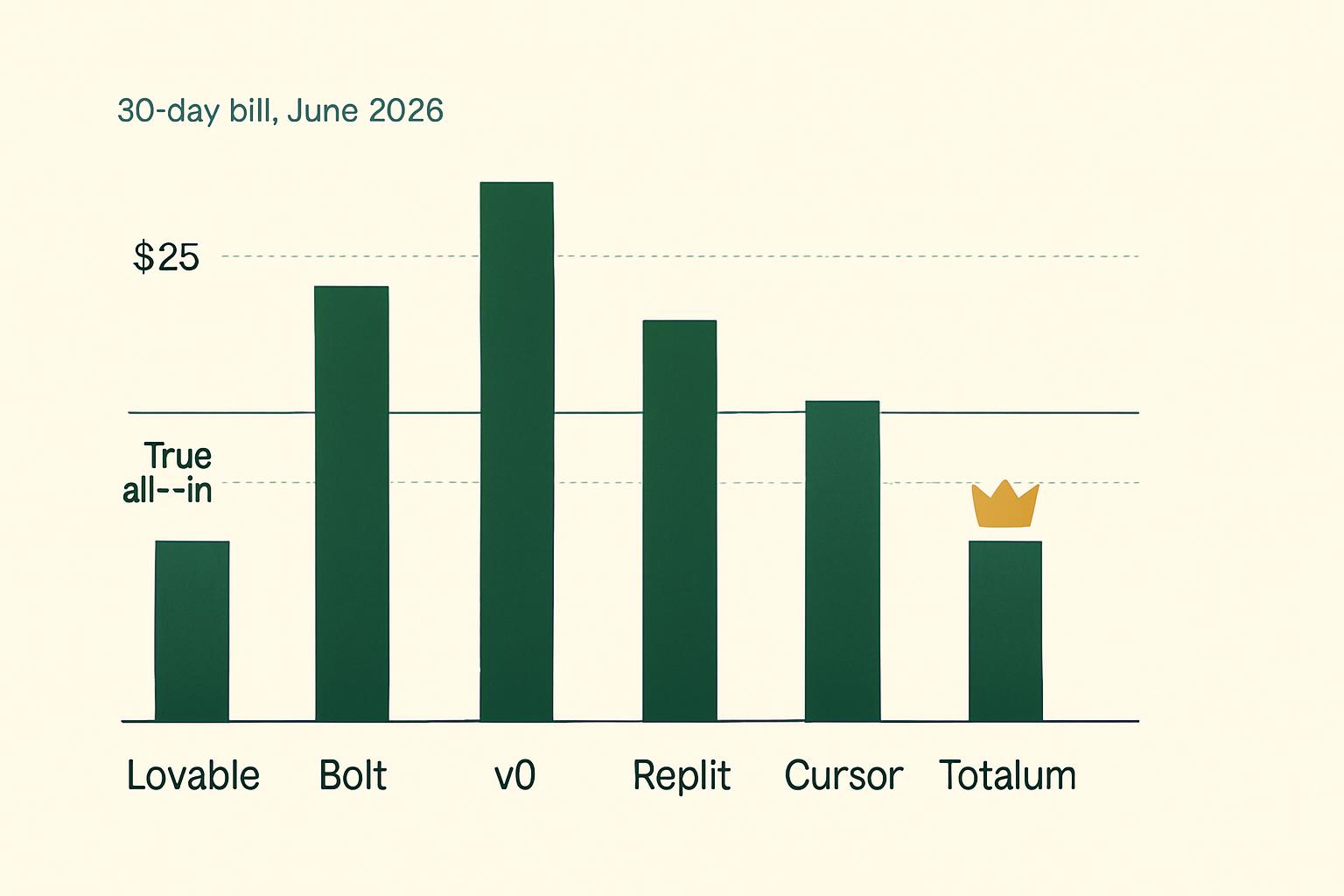
The sticker on Lovable, Bolt, v0, Replit, Cursor, and Totalum is between $20 and $79. The 30-day bill on a real reference workload is $69 to $270. Here is what each pricing page leaves off, with the math.
Three pricing ladders beat flat per-seat pricing for AI products in our teardown of 40 launches: a credit ladder, a usage-with-floor ladder, and an outcome ladder. Each cleared a 7%+ trial-to-paid rate by aligning the price metric with the value metric and putting a visible cap on downside. Pick the ladder that matches how your users feel cost, tokens, runs, or results, and price the rung, not the seat.
Build-vs-buy isn't a values debate, it's a breakeven date. SaaS wins early because it converts a big upfront build into a small monthly fee. DIY wins once your usage-based SaaS bill exceeds the fully-loaded cost of owning the code, typically around month 18 for infrastructure-style tools. This piece gives you the formula, a worked example, and the three traps that make teams build too early.
Your headline rate is a vanity number. Your effective hourly rate, total income divided by every hour the business consumed, billable or not, is what you actually earn. For most freelancers it lands 35–55% below the rate on their invoice once you count admin, sales, and unbilled rework. This piece shows how to compute it, why it's always lower than you think, and the three moves that raise it without raising your rate.