D

Author

Diego Aguirre

Diego pulls apart cloud and infrastructure invoices line by line so you can see where the money actually goes before the bill lands.

WorkOS Pricing in 2026: Is It Really Free, and What You Actually Pay

WorkOS pricing in 2026 is free for authentication up to 1 million monthly active users, then $2,500 per additional 1M. The real cost is enterprise features: SSO and Directory Sync (SCIM) run $125 per connection per month each, dropping to a published floor of $65 at 51 to 100 connections. Your WorkOS bill is driven by how many enterprise customers you have, not how many users.

8 min read697

Infrastructure economics

Fly.io Pricing in 2026: The Real 30-Day Bill

Fly.io pricing in 2026 is pure pay-as-you-go: you pay per second for the Machines (micro-VMs) you actually run, not a fixed plan. A small always-on app on a shared-cpu-1x 256MB Machine costs $2.19 a month; a two-Machine production SaaS with Postgres and Redis lands near $31 a month; a three-region app on performance Machines runs about $226 a month. The old Hobby, Launch, and Scale plan names were retired in the October 2024 pay-as-you-go switch, and the biggest lever left is a machine reservation, which cuts committed compute by 40%.

14 min read1986

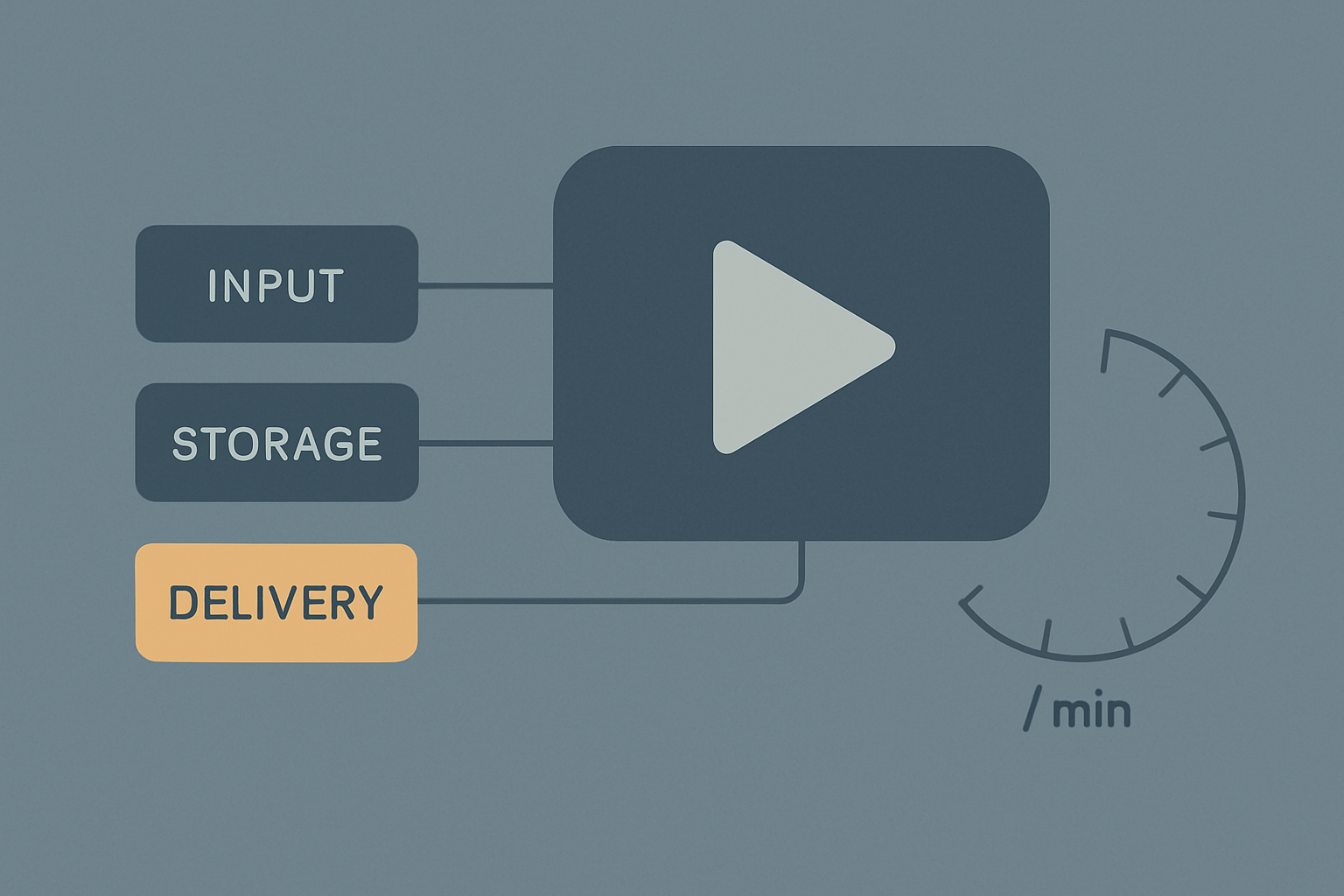
Mux Pricing in 2026: What You Actually Pay to Stream Video

Mux bills video in four meters, not one plan price. Here is the real 2026 arithmetic: worked 30-day bills for three app sizes, the resolution multiplier that quietly quadruples costs, and four levers that lower the bill.

7 min read749

Algolia Pricing in 2026: What Search Really Costs

As of July 2026, Algolia uses usage-based pricing with no flat subscription on its self-serve plans: a free plan Algolia publishes as Free (10K searches and 50K records a month), then Grow at $0.50 per 1,000 search requests and $0.40 per 1,000 records past the free allowance. Because search requests dominate at scale, the same store can cost $0 on the free tier, about $226 a month while growing, or roughly $1,655 a month at high traffic. Search volume and replica count drive most bills, but Algolia meters four products separately: Recommend requests and Crawler crawls bill on their own allowances too.

8 min read527
Pricing Teardowns

SendGrid Pricing in 2026: The Real Monthly Bill and the Overage Meter

SendGrid's paid floor is Essentials at $19.95/mo (50,000 emails), with Essentials 100K at $34.95 and Pro from $89.95/mo (100,000 emails plus one dedicated IP). Your real bill is the base price plus per-email overage ($0.0013 on the 50K plan, $0.0009 on 100K, $0.0011 on entry Pro). A 10K/mo sender pays a flat $19.95; 200K/mo on Pro runs about $199.95 if you eat overage.

9 min read980
Infrastructure economics

Cloudinary Pricing in 2026: What You Actually Pay

Cloudinary pricing in 2026 runs on credits: 1 credit equals 1,000 transformations, 1 GB of managed storage, or 1 GB of net delivery bandwidth. Free gives 25 credits, Plus is $99/mo ($89 annual) for 225 credits, and Advanced is $249/mo ($224 annual) for 600 credits. Because credits are one shared pool, delivery bandwidth is usually the line that runs out first, and it works out to roughly $0.40 per GB, far above a raw CDN.

9 min read891
tools

Lovable Pricing in 2026: What 100 Credits Really Cost You

As of September 2026, Lovable costs $0 (Free, 5 build credits/day up to 30 a month) or runs on an eleven-rung credit ladder: Pro from $25/month for 100 credits up to $2,250 for 10,000, and Business from $50 for the same 100 up to $4,300 for 10,000. Business is exactly twice Pro per credit at every rung, so $50 a month buys 200 Pro credits or 100 Business credits. A credit buys a variable amount of work: 0.50 to 1.70 credits per action in Default Mode, or 1 credit per message in Plan Mode. Budget by credits-per-feature and pick your rung, not by the sticker.

12 min read1845
Infrastructure economics

Resend Pricing in 2026: What You Actually Pay

Resend pricing in 2026 runs from a permanent Free tier (3,000 emails per month, capped at 100 per day) to Pro at $20 per month for 50,000 emails or $35 for 100,000, then Scale from $90 up to $1,150 per month for 2.5 million emails, with $0.90 per 1,000 overage. The catch the pricing page hides: your real cost is the effective price per 1,000 emails, which swings from $0.40 to $3.33 on the same $20 plan depending on how full your tier is. Budget by the tier you actually fill, and watch the separate marketing-contacts meter.

8 min read1446
Infrastructure economics

Clerk Pricing in 2026: What You Actually Pay Per User

Clerk's Free plan covers 50,000 monthly retained users (MRU) in 2026, so most side projects and early-stage SaaS pay $0. Pro is $25/month with 50,000 MRU included, then $0.02 per user in the 50,001 to 100,000 band. The bill that surprises teams is not per-user overage; it is the feature add-ons, B2B Auth at $100/month, Administration at $100/month, and extra Enterprise SSO connections at $75/month each. Clerk also bills retained users, not signups, so anyone who does not return 24 hours after signing up costs nothing.

7 min read983