Tag
#pricing
23 posts tagged.


Modal Pricing in 2026: What a Serverless GPU Bill Actually Costs
Modal bills GPU compute by the second with scale-to-zero. We decode the 2026 per-GPU rate card, the keep-warm idle trap, three real 30-day bills, and the ~73% utilization crossover versus a rented pod.

Braintrust Pricing in 2026: What You Actually Pay for LLM Evals
Braintrust bills by evaluation scores (rows x scorers x runs), not seats. We decode the meter, find the ~199,000-score Pro crossover, work three 30-day bills, and show a one-lever fix that cut a bill 71%.

LaunchDarkly Pricing in 2026: The Real 30-Day Bill
LaunchDarkly's 2026 pricing no longer charges per seat. The paid Foundation plan meters two lines: $10 per service connection per month after the first 5, which are included, plus $8.33 per 1,000 client-side monthly active users (MAU) on annual billing. The MAU meter bills your highest-volume context kind, so a 500,000-device app pays $4,165 a month on MAU alone even with far fewer logged-in users. A worked mid-size bill lands near $4,515 a month, about 92% driven by the MAU meter. Seats are free; the meter that hurts is client-side MAU.
Tinybird Pricing in 2026: The Real 30-Day Bill Behind the vCPU-Second Meter
Tinybird's 2026 pricing bills vCPU-seconds, not queries or storage. One always-on vCPU is $518.40/month. Here is the worked 30-day bill and the only lever that cuts it.
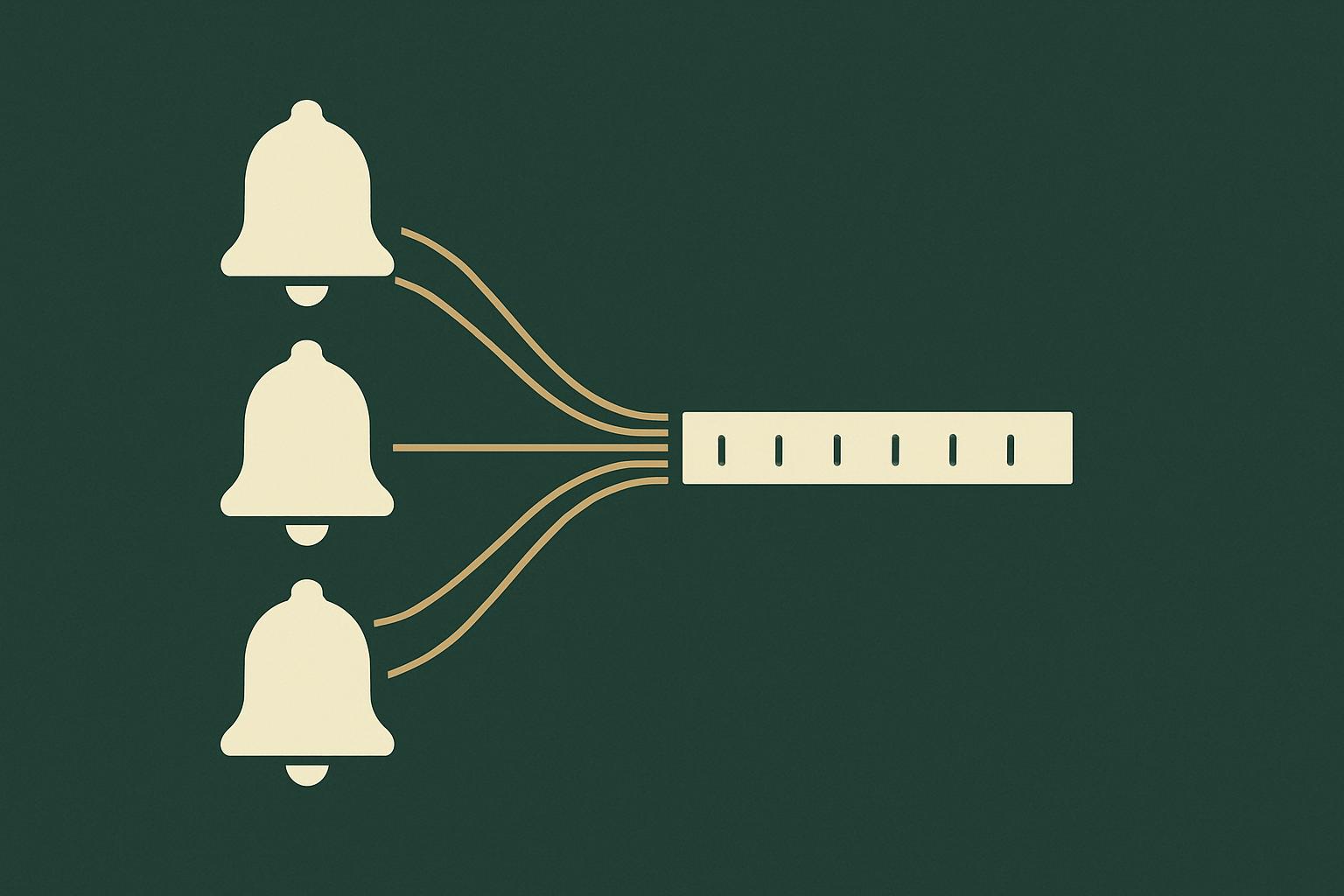
Knock Pricing in 2026: What Notification Infra Really Costs
As of July 2026, Knock's notification API charges per message, where a message is one delivery to one user on one channel. The Starter plan is $250 per month for 50,000 messages, then $0.005 each. Because Knock meters per channel, a single notification sent to email, push, and in-app counts as three messages, so a 5,000-user app fanning three channels can run about $750 per month. The same alerts cost roughly $250 on Courier's per-notification meter and about $54 on Novu's per-run Pro plan. Match the meter to your channel fan-out before you pick a vendor.

PostHog Pricing in 2026: What You Actually Pay
As of July 2026, PostHog has no fixed subscription. It is free to start with no credit card, and each of its products bills separately once you pass a generous monthly free tier: 1M product-analytics events, 5K session replays, 1M feature-flag requests, 100K error-tracking exceptions, and more. Product analytics starts at $0.00005 per anonymous event and gets cheaper per event as volume rises. The catch nobody flags: identified events can cost up to 4x more. Most side projects pay $0; a growing SaaS usually lands between roughly $50 and a few hundred dollars a month; the five-figure horror stories come from high-volume, autocapture-heavy, all-identified setups with no billing limit set.

Upstash Pricing in 2026: What You Actually Pay for Serverless Redis
As of July 2026, Upstash Redis is free up to 256 MB and 500K commands per month; pay-as-you-go bills $0.20 per 100K commands plus $0.25/GB stored, and fixed plans run $10 to $1,500/month. Because Upstash charges per command, not per server, request volume sets your bill, not data size. Above ~5M commands/month a flat $10 fixed plan usually beats pay-as-you-go.
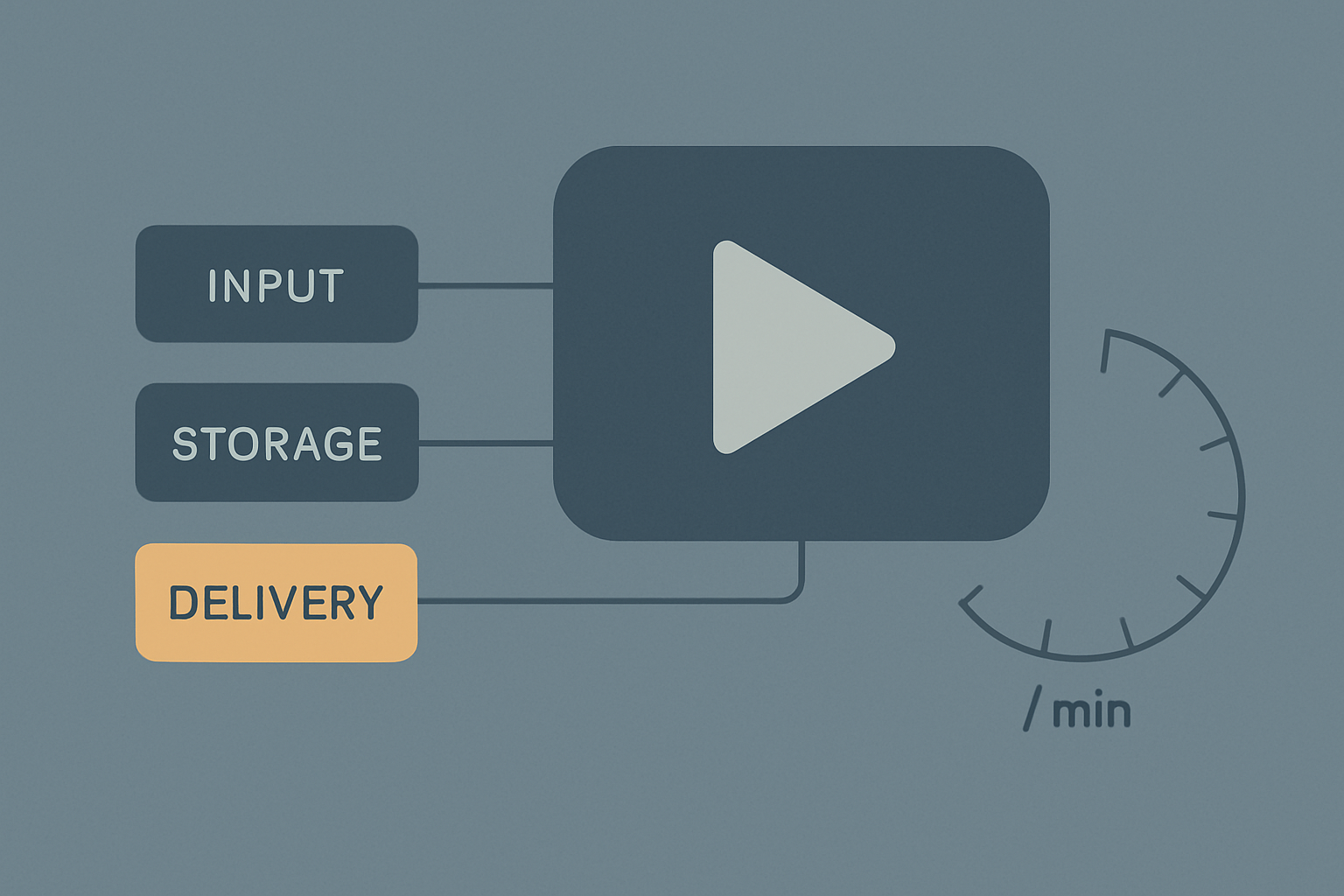
Mux Pricing in 2026: What You Actually Pay to Stream Video
Mux bills video in three meters, not one plan price. Here is the real 2026 arithmetic: worked 30-day bills for three app sizes, the resolution multiplier that quietly quadruples costs, and four levers that lower the bill.

Pinecone Pricing in 2026: What You Actually Pay
Pinecone runs on usage-based serverless pricing in 2026: a free Starter tier, a $20/month flat Builder plan, and a Standard plan with a $50/month minimum. You pay $16 to $18 per million read units depending on cloud and region, $4 to $4.50 per million write units, and $0.33 per GB of storage each month. The catch most teams miss: a query costs one read unit per GB of namespace size, not per query, so your bill is set by how you shape your namespaces, not how many searches you run. A hobby RAG app fits the free tier at $0; a 20 GB single-corpus production app runs about $110/month; a 50-million-vector multi-tenant app with per-tenant namespaces lands near $75.

Cloudflare Workers pricing in 2026: the real bill when you pay for CPU, not wall-clock time
Cloudflare Workers bills CPU time, not duration, which inverts everything you know from AWS Lambda. Here is the 2026 pricing, three worked monthly bills, what the $5 platform minimum actually covers across KV and Durable Objects, and the 3-millisecond breakpoint that decides your cost.

SendGrid Pricing in 2026: The Real Monthly Bill and the Overage Meter
SendGrid's paid floor is Essentials at $19.95/mo (50,000 emails), with Essentials 100K at $34.95 and Pro from $89.95/mo (100,000 emails plus one dedicated IP). Your real bill is the base price plus per-email overage ($0.0013 on the 50K plan, $0.0009 on 100K, $0.0011 on entry Pro). A 10K/mo sender pays a flat $19.95; 200K/mo on Pro runs about $199.95 if you eat overage.