A date audit found four posts stamped 6 to 47 days before the domain existed. Here is what changed, how the new dates were chosen, and the two lookups that let you check it.
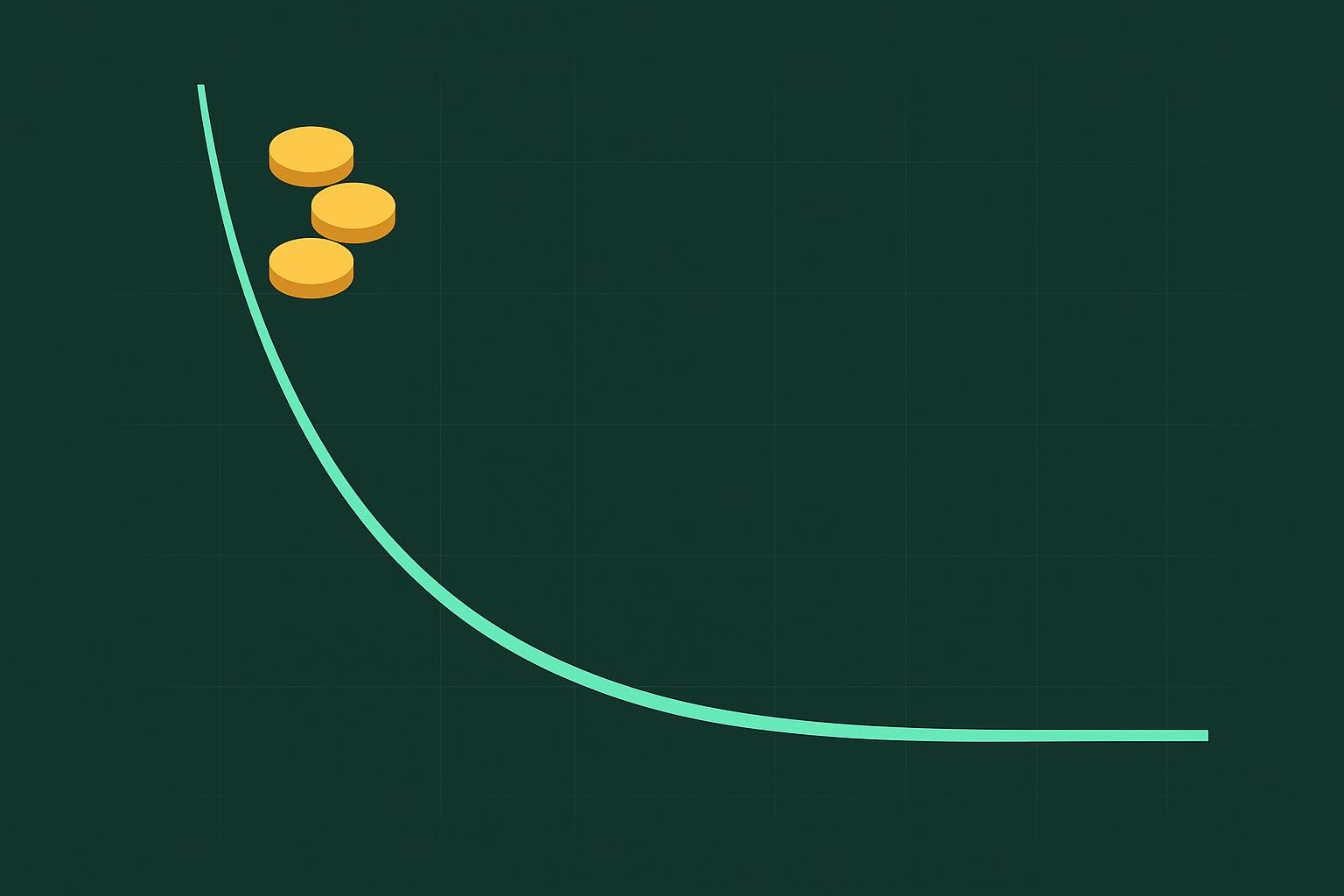
Your real blended Stripe rate in 2026 is 2.9% plus $0.30 divided by your average ticket (US domestic online cards). Below about $20 the flat 30 cents dominates: an $8 ticket pays 6.65%, a $45 ticket 3.57%, a $220 ticket 3.04%. The biggest lever is raising your average ticket (annual billing, bundling, minimums) or moving large invoices to ACH at 0.8%, capped at $5.
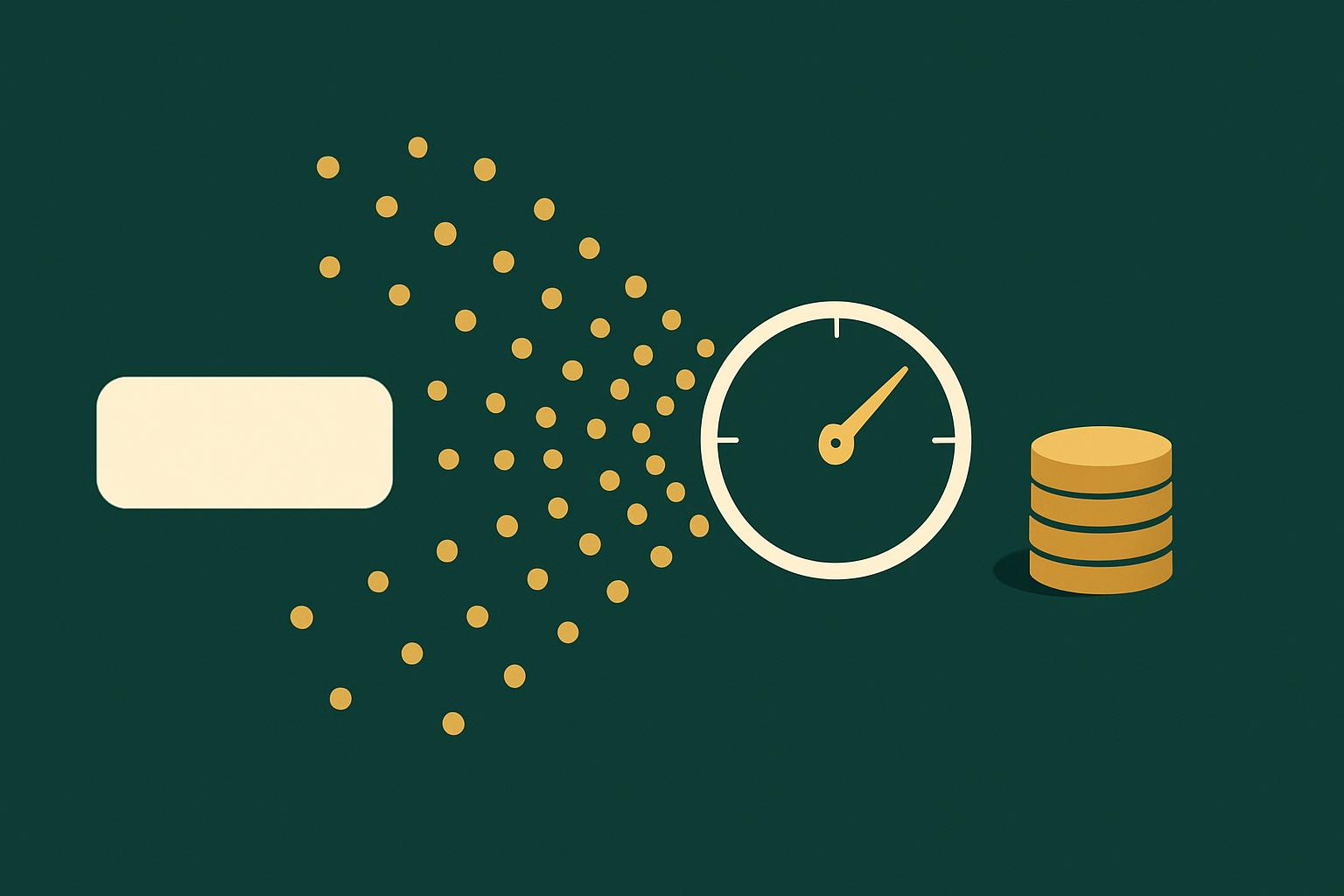
Modal bills GPU compute by the second with scale-to-zero. We decode the 2026 per-GPU rate card, the keep-warm idle trap, three real 30-day bills, and the ~73% utilization crossover versus a rented pod.
Braintrust bills by evaluation scores (rows x scorers x runs), not seats. We decode the meter, find the ~199,000-score Pro crossover, work three 30-day bills, and show a one-lever fix that cut a bill 71%.
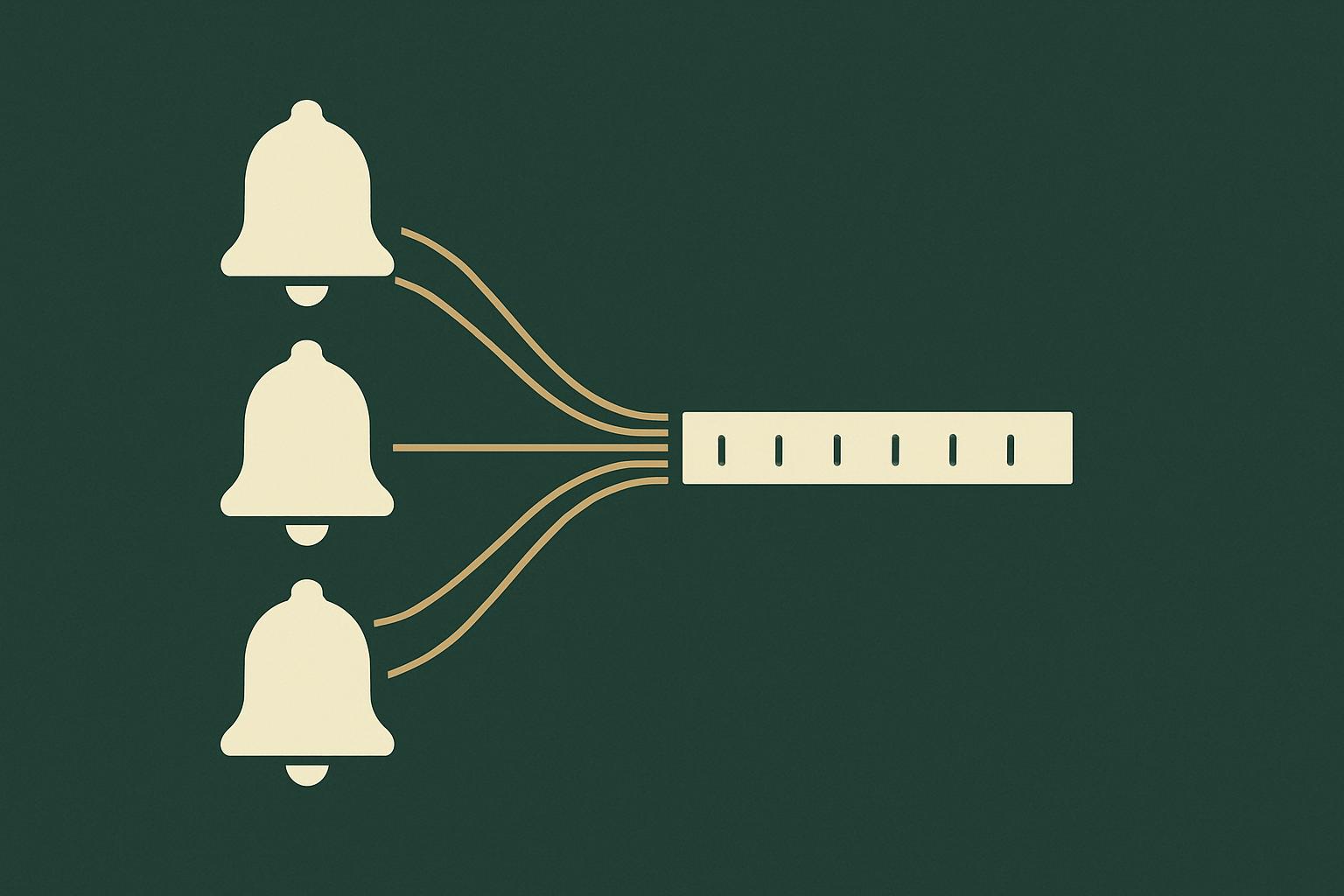
Courier bills $0.005 per notification sent, first 10,000 free, and the meter counts notifications, not channels. Three worked 30-day bills and the one lever that cuts them.
Unkey's API-key pricing is a step ladder, not a slope. We map the effective cost per million valid requests, find the threshold cliff, and run three 30-day bills.
As of July 2026, Knock's notification API charges per message, where a message is one delivery to one user on one channel. The Starter plan is $250 per month for 50,000 messages, then $0.005 each. Because Knock meters per channel, a single notification sent to email, push, and in-app counts as three messages, so a 5,000-user app fanning three channels can run about $750 per month. The same alerts cost roughly $250 on Courier's per-notification meter and about $54 on Novu's per-run Pro plan. Match the meter to your channel fan-out before you pick a vendor.
Pusher Channels pricing in 2026 runs from a free Sandbox (100 concurrent connections, 200k messages/day) to $49 Startup, $99 Pro, $299 Business, and up to $1,199, billed on two meters: peak concurrent connections and messages per day. The trap is peak connections, because your plan must cover your highest simultaneous connection count, so a single 25-minute spike can push you from $99 to $499 for the whole month. This teardown works three real monthly bills, shows why the same app costs $99 on Pusher, about $278 on Ably, and about $630 on Liveblocks purely because each bills on a different meter, and does the self-host crossover math with Soketi.
PlanetScale killed its free tier, so what does it really cost in 2026? A numbers-first teardown: the full price ladder, a worked monthly bill for a small production app, and the exact usage point where a cheaper database like Neon wins.
As of July 2026, PostHog has no fixed subscription. It is free to start with no credit card, and each of its products bills separately once you pass a generous monthly free tier: 1M product-analytics events, 5K session replays, 1M feature-flag requests, 100K error-tracking exceptions, and more. Product analytics starts at $0.00005 per anonymous event and gets cheaper per event as volume rises. The catch nobody flags: identified events can cost up to 4x more. Most side projects pay $0; a growing SaaS usually lands between roughly $50 and a few hundred dollars a month; the five-figure horror stories come from high-volume, autocapture-heavy, all-identified setups with no billing limit set.
As of July 2026, Upstash Redis is free up to 256 MB and 500K commands per month; pay-as-you-go bills $0.20 per 100K commands plus $0.25/GB stored, and fixed plans run $10 to $1,500/month. Because Upstash charges per command, not per server, request volume sets your bill, not data size. Above ~5M commands/month a flat $10 fixed plan usually beats pay-as-you-go.